
Marta R. M. Lima
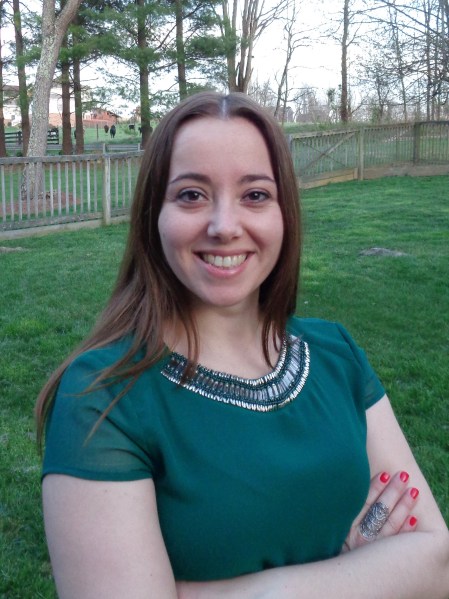
Dr. Lima received her B.Sc. degree in Applied Biology from the University of Minho in 2003 and earned her Ph.D. in 2009 at the same university. In 2010, she completed a Specialization in Epidemiology from the Faculty of Medicine at the University of Porto. Dr. Lima held postdoctoral appointments at the Portuguese Catholic University, Baylor College of Medicine, and University of California Davis, before becoming an Assistant Professor at the University of New Hampshire in 2018, where she established the Lima Lab. She moved to Virginia Tech in 2021, where she held a faculty appointment through 2025. Currently, Dr. Lima is expanding her contribution to the academy by founding Quercus Pathways LLC, where she leverages her research background to provide consulting and professional coaching while remaining open to interdisciplinary research collaborations.
Dr. Lima currently serves as an Officer of section C9 – Crops for Health and Nutrition, in the Crop Science Society of America, and serves as an Associate Editor for the Crop Science section C9 (Crops for Health and Nutrition). She also serves as a Review Editor for the Plant Nutrition section of Frontiers in Plant Science, and the Nutrition and Sustainable Diets section of Frontiers in Nutrition and Frontiers in Sustainable Food Systems.
Past Lab Members
Graduate Students
Palash Mandal – PhD Agricultural Sciences, University of New Hampshire, 2021-2025
A. S. Chandrakala – Physiology and Biochemistry of Cold-Hardy Table Grapevines, MSc Agricultural Sciences, University of New Hampshire, 2019-2022
Undergraduate Researchers
Elayna Ealy – Using chitosan as a sustainable approach to improve soybean iron nutrition, Virginia Tech, Spring 2024
Leah Ford – Grape post-harvest quality, University of New Hampshire, Fall 2020
Madeline Young – Plant iron deficiency chlorosis, University of New Hampshire, 2019-2020
Molly Hanlon – Post-harvest nutritional quality of cold hardy table grapes produced on different vine training systems, Honors Thesis, University of New Hampshire, 2019-2020
Hannah Siegel – Phytoestrogens in legume forages, University of New Hampshire, Spring 2019
Jessica Hodgkins, University of New Hampshire, Fall 2018
 Lima Lab
You must be logged in to post a comment.